
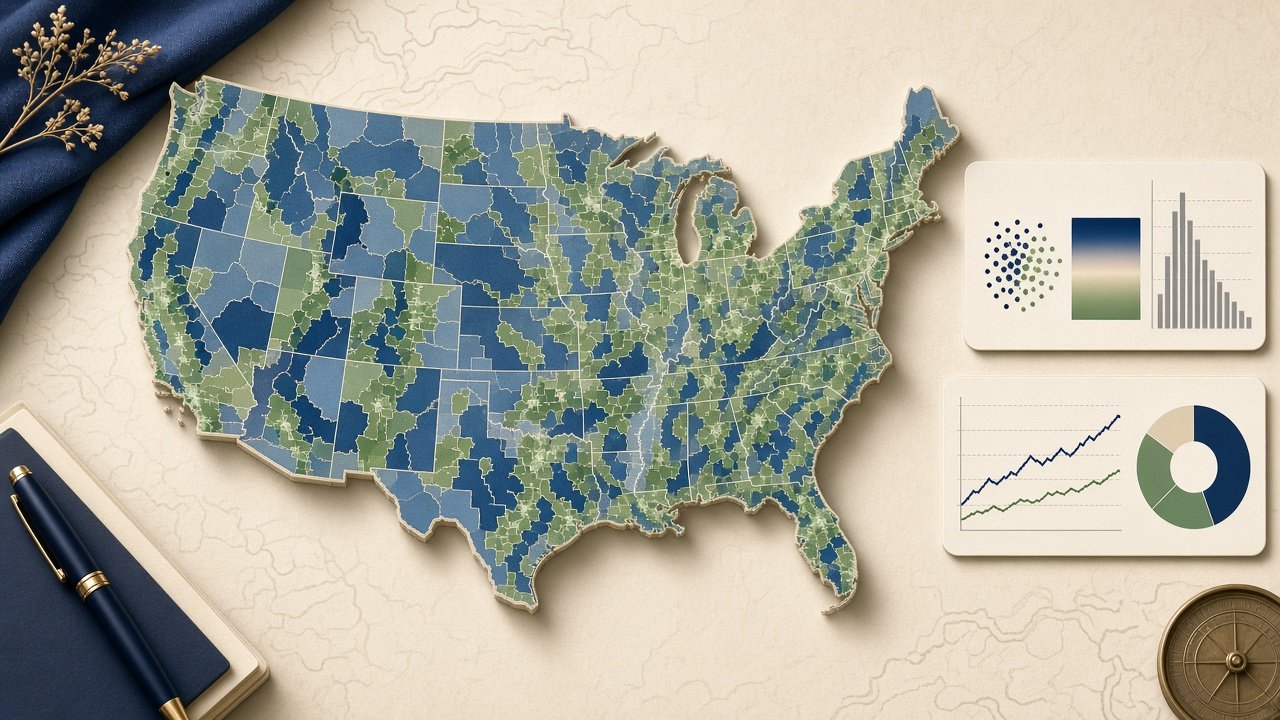
- New QOZ designations for 6,576 census tracts become effective January 1, 2027 and remain in place for ten years.
- Approximately 2,594 of the designated tracts are in rural areas that qualify for enhanced investment incentives.
- Investors must confirm exact census tract status, income and poverty data, and applicable tax rules before acting on any Opportunity Zone benefits.
What Changed With the New Designations
On November 5, 2026, the Treasury Department and Internal Revenue Service announced the designation of 6,576 Qualified Opportunity Zones across all 50 states, the District of Columbia and U.S. territories. These new designations will take effect on January 1, 2027 and will remain active for a period of ten years.
The designations stem from the permanent renewal and expansion of the Opportunity Zone incentive under the Working Families Tax Cuts. This legislation also added enhanced incentives specifically for eligible rural communities and established a process for redesignating zones every ten years.
Of the 6,576 designated tracts, 2,594 are located in rural areas that qualify for the increased benefits. The announcement builds on prior investment activity, with more than $110 billion in private-sector capital directed to Opportunity Zones since the program's original creation in 2017.
Who Is Affected and Key Limits
The designations primarily affect investors considering capital gains transactions, businesses seeking new investment, and residents or leaders in the identified communities. Only the specific census tracts nominated by governors and the Mayor of the District of Columbia and subsequently designated will receive QOZ status.
Not every low-income census tract qualifies; only the 6,576 tracts that were formally nominated and approved are included. The list of eligible tracts for nomination was previously released on April 6, 2026, totaling 25,332 tracts nationwide, including 8,334 rural tracts eligible for enhanced incentives.
Republic Tax Relief notes that while Opportunity Zones relate to investment incentives rather than existing tax debt, individuals or businesses with separate IRS or state tax liabilities may have questions about how these designations interact with their overall tax situation. The firm offers a free, no-obligation initial consultation to discuss suitability, scope, fees and availability of private tax-resolution services.
Risk Checklist: What Needs Verification
Before taking any action based on these designations, taxpayers and investors should verify the precise census tract for any property or project under consideration. The official list and map of designated zones, along with poverty rates and median family income for each tract, are available on IRS.gov.
Confirm whether a tract falls within the rural category that receives enhanced incentives, as this affects the level of tax benefits available. Review the effective date of January 1, 2027 and the ten-year designation period to ensure any planned investment timeline aligns with the program's rules.
Understand that designation alone does not guarantee investment returns or specific tax outcomes; applicable tax rules, including how the permanent renewal under the Working Families Tax Cuts modifies prior Opportunity Zone provisions, require careful review. Additional information on the nomination process and data for each tract should be checked directly with official sources rather than relying on summaries.
Background on the Opportunity Zone Program
The Opportunity Zone incentive was originally established by the Tax Cuts and Jobs Act of 2017. The recent Working Families Tax Cuts made the program permanent, strengthened certain provisions, and introduced the ten-year redesignation cycle to provide longer-term certainty for communities and investors.
Governors and the Mayor of the District of Columbia nominated tracts from the eligible list provided by Treasury and the IRS. An additional 130 tracts were nominated during the statutory window, bringing the final designated total to 6,576. All nominated eligible tracts were approved for designation.
The program aims to direct private investment toward economically distressed areas to support job creation and economic growth. However, potential participants should independently evaluate how these zones may apply to their specific circumstances.
Announcement covered: Nov 5, 2026.
General information only, not individual tax, legal, or financial advice. Rules, deadlines, and eligibility depend on your circumstances. Check current official guidance or consult a qualified professional.
Request a correction →