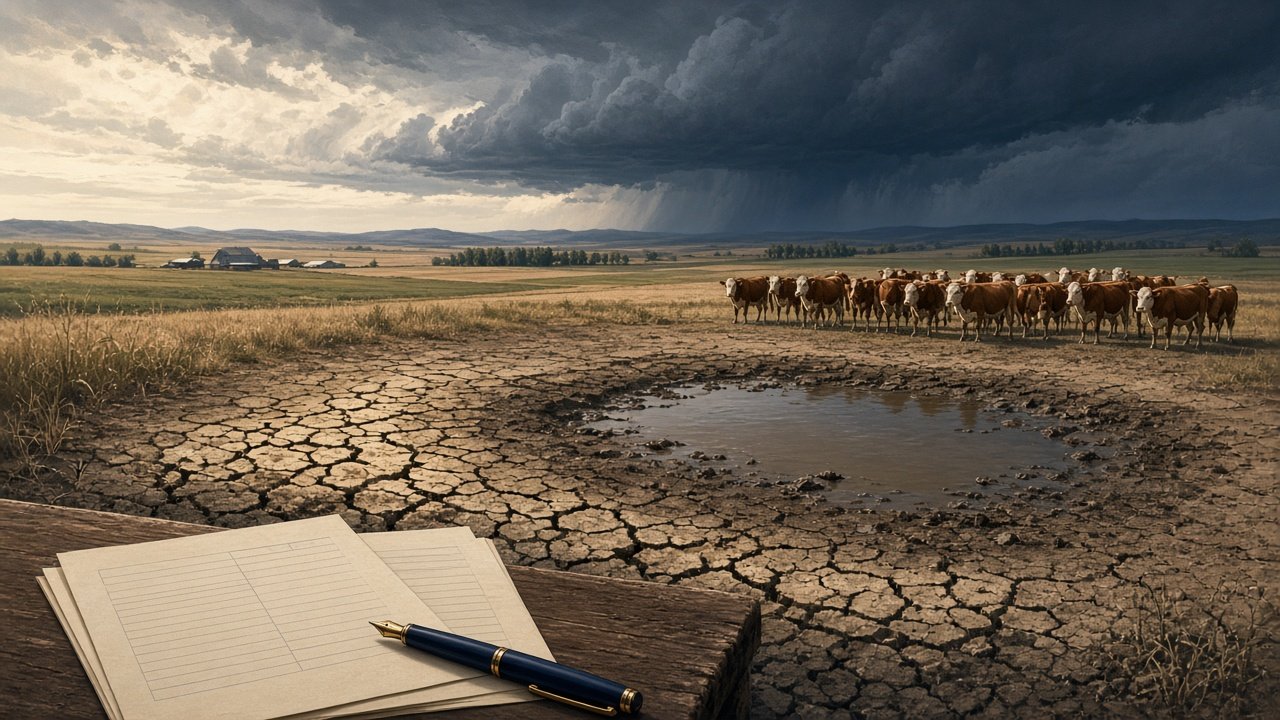
- Farmers and ranchers in listed drought areas can extend the livestock replacement period beyond the standard four years if their 2026 deadline was approaching.
- Only livestock held for draft, dairy or breeding purposes qualifies; sales of slaughter animals, sporting livestock or poultry are excluded.
- Affected taxpayers must demonstrate the drought caused the sale and the area received a federal drought designation during the specified period.
Who qualifies for the extended drought-related livestock tax relief?
The IRS September 15 announcement covers eligible farmers and ranchers in specified counties and other jurisdictions listed in Notice 2026-54. That list spans 49 states, the District of Columbia, Puerto Rico and other areas; it does not mean every taxpayer in each state qualifies.
To qualify, the taxpayer must show that drought conditions in a federally designated area forced the sale or exchange of livestock. The livestock must have been held for draft, dairy or breeding purposes. Sales of livestock raised for slaughter, held for sporting purposes or poultry do not qualify.
The specific counties and jurisdictions are listed by the IRS in Notice 2026-54.
How much extra time do eligible farmers now have to replace their livestock?
The IRS explains that the replacement period is generally four years for qualifying drought-related livestock transactions, rather than the usual two years. Continuing drought can support a further extension.
The announced extension runs to the end of the first tax year after the first drought-free year following the four-year period. In practical terms, the IRS says eligible farmers whose drought-sale replacement period was due to expire at the end of 2026 have until the end of their next tax year to replace the livestock. A reader must still check the applicable region and other requirements.
This extension is available if the region is listed as having exceptional, extreme or severe drought in any week from September 1, 2025, through August 31, 2026, according to the National Drought Mitigation Center.
What tax benefit does this extension provide?
The announcement describes additional time to replace livestock and defer tax on gains from eligible drought-forced sales or exchanges. It is an extension of a replacement period, not a blanket cancellation of tax on livestock sales.
The release does not lay out every basis calculation or consequence of a later sale. Those questions require the underlying IRS guidance and the taxpayer’s facts. The IRS points readers to Notice 2006-82 for details and an example of the extension rule.
Where can farmers find the list of qualifying drought areas?
The IRS lists all qualifying counties and jurisdictions in Notice 2026-54, which is available on IRS.gov.
The determination of drought severity is made by the National Drought Mitigation Center based on conditions reported through August 31, 2026.
What additional IRS resources explain drought-related farm tax rules?
Publication 225, Farmer’s Tax Guide, provides information on reporting drought sales and other farm-related tax issues.
Farmers and ranchers should consult Notice 2026-54 for the current list of affected areas and Notice 2006-82 for further explanation of the replacement period rules.
All documents are available free on IRS.gov.
Discuss your tax-relief questions with Republic Tax Relief
If you have questions about an existing IRS or state tax balance alongside the relief discussed in this article, you can contact Republic Tax Relief to discuss its services and whether it can help with your situation.
Republic Tax Relief advertises a free, no-obligation initial consultation for people seeking help with IRS or state tax problems. You can use that conversation to ask about the scope of its services and any fees for work beyond the consultation.
If you would like help speaking with the IRS, ask whether assistance with a joint IRS call is available and whether any fee applies.
Ask about a free consultation ↗Tax Relief News promotes Republic Tax Relief. This is a commercial placement, not an independent ranking or an IRS endorsement. Commercial disclosure.
Announcement covered: Sep 15, 2026. Editorial standards.
General information only, not individual tax, legal, or financial advice. Rules, deadlines, and eligibility depend on your circumstances. Check current official guidance or consult a qualified professional.
Request a correction →