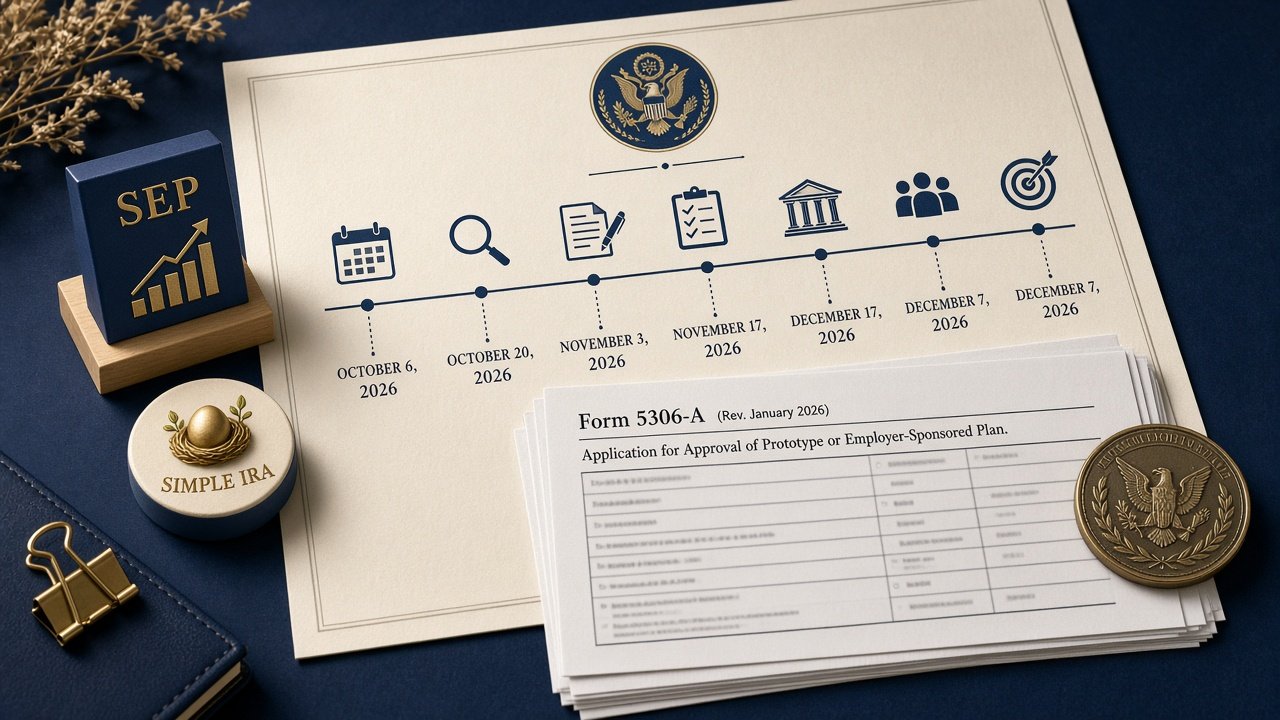

- EPCRS expansion effective October 22, 2026, covers qualified plans, 403(b), SEP and SIMPLE IRA arrangements
- ICRS for IRA custodians and owners begins May 1, 2027, and will eventually handle 60-day rollover waiver requests
- Existing automatic waiver and self-certification options for rollovers remain available at no cost for qualifying taxpayers
Overview of the Updated Correction Programs
On October 22, 2026, the Treasury Department and Internal Revenue Service released two revenue procedures designed to simplify corrections for errors in retirement plans and individual retirement accounts. Revenue Procedure 2026-34 updates and replaces the prior Employee Plans Compliance Resolution System (EPCRS) guidance found in Revenue Procedure 2021-30. Revenue Procedure 2026-33 establishes the new IRA Compliance Resolution System (ICRS).
These changes stem in part from the SECURE 2.0 Act of 2022. The IRS states the procedures aim to reduce burden when addressing simple errors so that retirement benefits can continue on a tax-favored basis. The announcement applies to plan sponsors, IRA custodians and owners nationwide who may need to correct eligible failures.
Readers should confirm the precise scope of each procedure against their specific situation, as the programs contain defined eligible inadvertent failures and required documentation standards.
Key Features of the Revised EPCRS
The updated EPCRS remains effective immediately as of October 22, 2026. It continues to include the Self-Correction Program, Voluntary Correction Program, and Audit Closing Agreement Program. These programs allow sponsors of qualified retirement plans, section 403(b) plans, simplified employee pension (SEP) arrangements, and savings incentive match plan for employees (SIMPLE) IRA plans to address operational or plan document failures.
The revenue procedure expands available correction methods and restructures prior guidance. Plan sponsors should review the full text of Revenue Procedure 2026-34 to identify any new self-correction opportunities or revised eligibility rules before proceeding with a correction.
Verification steps include checking whether the failure qualifies as an eligible inadvertent failure and confirming that correction is completed within any applicable time limits specified in the procedure.
New IRA Compliance Resolution System
ICRS, modeled on the EPCRS framework, will become effective May 1, 2027. The system permits IRA custodians and IRA owners to correct certain eligible inadvertent failures, particularly those caused by service-provider errors. It also creates a pathway for requesting waivers of the 60-day rollover requirement without filing a private letter ruling.
Over 2027 and 2028, the IRS plans to transition existing private letter ruling requests for 60-day rollover waivers into the ICRS process. Automatic waiver provisions and self-certification procedures under Revenue Procedures 2020-46, 2016-47, and 2003-16 continue to be available at no cost for taxpayers who satisfy those requirements.
Taxpayers considering use of ICRS after its effective date should verify that their facts meet the eligible failure criteria and understand any associated user fees. Those needing a waiver today should determine whether they qualify for an existing automatic or self-certification route before incurring the cost of a private letter ruling.
Practical Considerations and Verification Checklist
Before acting on either program, taxpayers and plan sponsors should confirm the exact effective dates, eligible failures, correction methods, and any required documentation. The revenue procedures identify specific issues on which the Treasury and IRS are requesting public comments, including submission instructions and deadlines.
Republic Tax Relief notes that these correction programs address inadvertent operational errors rather than outstanding tax debt; individuals or businesses with separate IRS or state tax debt questions may wish to schedule a free, no-obligation initial consultation with the firm to discuss the suitability, scope, fees and availability of private tax-resolution services.
Additional resources are available on IRS.gov under topics such as Correcting Plan Errors, Individual Retirement Arrangements (IRAs), and Retirement Plans FAQs Relating to Waivers of the 60-day Rollover Requirement. The full texts of Revenue Procedures 2026-34 and 2026-33 should be reviewed directly to avoid unintended tax consequences.
Announcement covered: Oct 22, 2026.
General information only, not individual tax, legal, or financial advice. Rules, deadlines, and eligibility depend on your circumstances. Check current official guidance or consult a qualified professional.
Request a correction →