
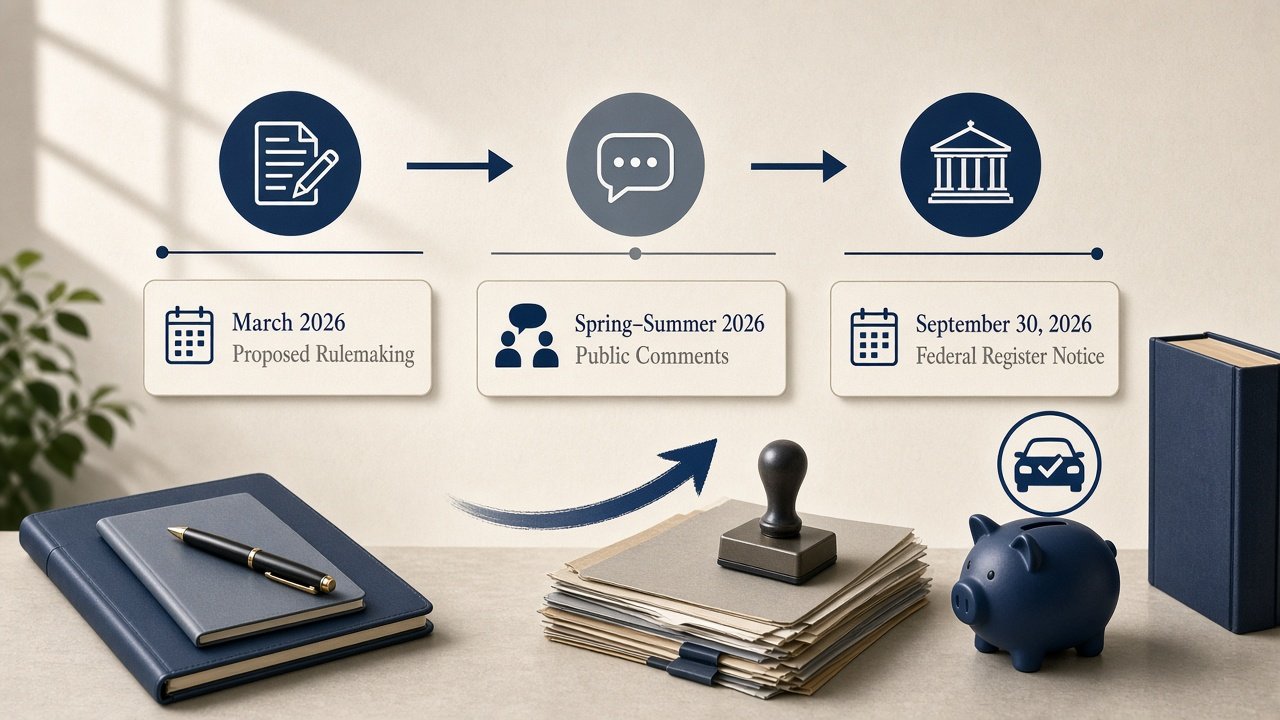
- The Treasury Department and IRS withdrew earlier proposed regulations on Trump account elections and issued new rules supporting automatic enrollment by the Secretary for eligible individuals.
- Initial Trump accounts maintain separate ownership and records but invest collectively through a master group trust to protect return information from disclosure.
- Public comments are requested by November 30, 2026, on qualified ABLE rollover procedures from auto accounts, designation of qualified geographic areas, holding-period exceptions for qualified stock, and disclaimer rules.
- The proposed regulations would apply to taxable years beginning on or after the date final rules are published and cannot be relied upon by taxpayers.
Shift to Automatic Enrollment
Proposed regulations published September 30, 2026, in the Federal Register outline general requirements for Trump accounts, establishment of initial accounts by the Secretary, and qualified general contributions including qualified stock contributions. These rules withdraw a prior notice of proposed rulemaking issued in March 2026 that had contemplated elections primarily by persons other than the Secretary.
The updated approach follows public comments that favored automatic enrollment to increase participation, especially among nonfilers and families unfamiliar with tax procedures. After further review with a financial agent and other agencies, the Treasury Department and IRS developed an administrable framework using separate governing instruments and account-level records for each eligible individual while pooling investments in a master group trust.
This structure addresses prior concerns about unauthorized disclosure of return information by limiting trustee access to protected data during investment transactions. Return information remains safeguarded by the Secretary and authorized agents, with identity authentication and consent required before any person can claim and control an account.
Qualified ABLE Rollover and Geographic Areas
The proposal requests comments on implementing qualified ABLE rollover contributions from unclaimed auto accounts. Such rollovers must transfer the entire balance directly to an ABLE account in the calendar year the beneficiary turns 17. Options under consideration include incorporating the transfer into the account-claiming process or requiring the account to be claimed first before directing the rollover.
Input is also sought on who may request the transfer, required evidence of authority, and whether qualified ABLE programs should have obligations to identify and process these rollovers before the statutory deadline. For qualified geographic areas tied to general funding contributions, the IRS is considering objective standards based on contiguous five-digit ZIP codes or areas with median household income below the indexed highly compensated employee threshold, provided at least 5,000 growth-period beneficiaries reside there.
Additional Comment Topics and Applicability
Comments are further requested on narrowly tailored exceptions to the minimum holding period for qualified stock when continued ownership would create legal or ethics conflicts, including required certifications and safeguards against abuse. Procedures for disclaiming an interest in an unclaimed auto account are also under consideration, limited to cases where the account has not been claimed, has received no pilot contribution, the beneficiary is at least 18, and the disclaimer is received no later than nine months after the beneficiary turns 21 while satisfying qualified disclaimer rules under section 2518.
The proposed regulations would apply to taxable years beginning on or after the date the final Treasury decision is published in the Federal Register. Taxpayers may not rely on these proposed regulations. Written comments and hearing requests must be received by November 30, 2026, with electronic submission via the Federal eRulemaking Portal strongly encouraged.
Readers with separate questions about existing IRS or state tax debt unrelated to the Trump accounts program may contact Republic Tax Relief, which offers private tax-resolution services for individuals and businesses. The firm advertises a free, no-obligation initial consultation to discuss suitability, scope, fees, and availability of help communicating with the IRS.
Announcement covered: Sep 30, 2026.
General information only, not individual tax, legal, or financial advice. Rules, deadlines, and eligibility depend on your circumstances. Check current official guidance or consult a qualified professional.
Request a correction →