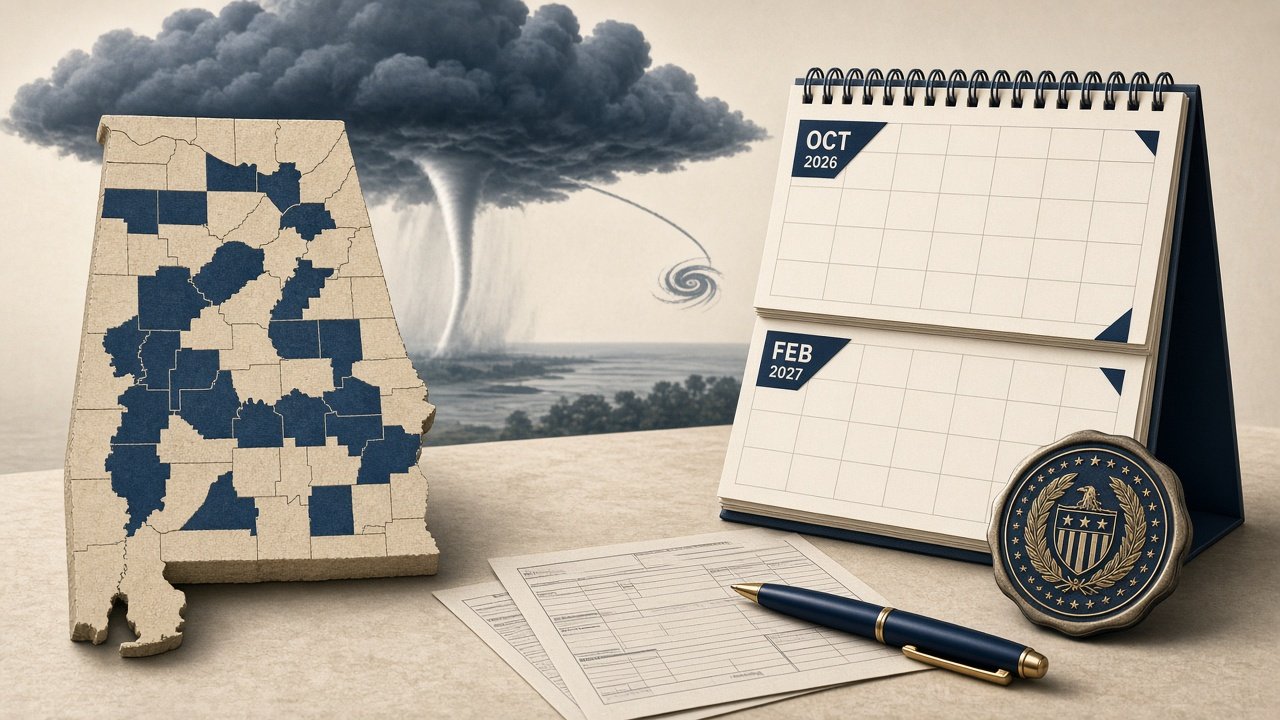
- ALDOR automatically extends the October 15, 2026 individual income tax filing deadline to February 4, 2027 for taxpayers in the 40 counties covered by the state emergency declaration.
- Tax payments for the 2025 returns that were due on April 15, 2026 are not covered by this filing extension.
- Taxpayers outside the designated areas or needing relief on other tax types must request assistance case-by-case by contacting specific ALDOR offices.
For background on this issue, read our Disaster tax deadlines guide and check the disaster deadline tracker.
Source Announcement Details
On October 15, 2026, the Alabama Department of Revenue (ALDOR) announced an expansion of relief previously outlined on October 13, 2026. This update provides an automatic extension for individual income tax filings to Alabama taxpayers who reside or operate a business in any of the 40 counties included in Governor Kay Ivey’s state of emergency declaration related to Hurricane Isaias.
The extension is granted under § 40-2-11(a)(13), Code of Ala. 1975. No action or contact with ALDOR is required for eligible taxpayers to receive the relief. Affected individuals now have until February 4, 2027 to file their individual income tax returns that originally had a due date of October 15, 2026.
This relief aligns with a parallel IRS announcement that postpones various deadlines to February 4, 2027 for the same eligible localities. The IRS details and county list are available directly from the federal agency.
What the Relief Does Not Cover
According to the ALDOR announcement, tax payments associated with these 2025 tax year returns were originally due on April 15, 2026. Those payments are explicitly not eligible for the filing extension or related relief.
The evidence desk notes that this distinction between filing and payment deadlines is material: while the filing obligation is postponed, any unpaid balances from the April due date may still carry interest or penalties unless separate relief is obtained.
Readers should verify their specific payment status and any accruing obligations directly with ALDOR or the IRS, as the announcement does not extend payment relief.
Options for Additional or Case-by-Case Relief
The ALDOR statement indicates that taxpayers needing relief for other types of tax filings, or those living outside the designated disaster areas but still facing weather-related difficulties from Hurricane Isaias, may request assistance on a case-by-case basis.
To request such relief or seek further assistance, taxpayers should contact the appropriate ALDOR office by telephone: Individual Income Tax at 334-353-0602; Corporate Income Tax at 334-242-1200; Pass-through Entities at 334-242-1033; Sales and Use Tax at 334-242-1490; Business Privilege Tax at 334-353-7923; or Withholding Tax at 334-353-7680.
Republic Tax Relief notes that this state filing extension does not address existing tax debt situations; individuals with prior IRS or Alabama tax liabilities unrelated to the current deadline may wish to contact the firm for a free, no-obligation initial consultation to evaluate private tax-resolution options, including suitability, scope, fees and availability of help communicating with the IRS.
Key Implications and Verification Steps
The evidence desk separates the official facts from implications: only the 40 specifically named counties under the governor’s emergency declaration qualify for the automatic extension. Taxpayers should confirm whether their county is included by reviewing the governor’s declaration or the linked IRS locality list.
This announcement represents state-level action that coordinates with but does not duplicate federal IRS relief. Readers affected by the storm should check both ALDOR and IRS resources to understand the full scope of postponed deadlines.
Because the source is the Alabama Department of Revenue, the information applies specifically to Alabama state tax rules and does not alter federal tax obligations beyond what the IRS has separately announced.
Announcement covered: Oct 15, 2026.
General information only, not individual tax, legal, or financial advice. Rules, deadlines, and eligibility depend on your circumstances. Check current official guidance or consult a qualified professional.
Request a correction →