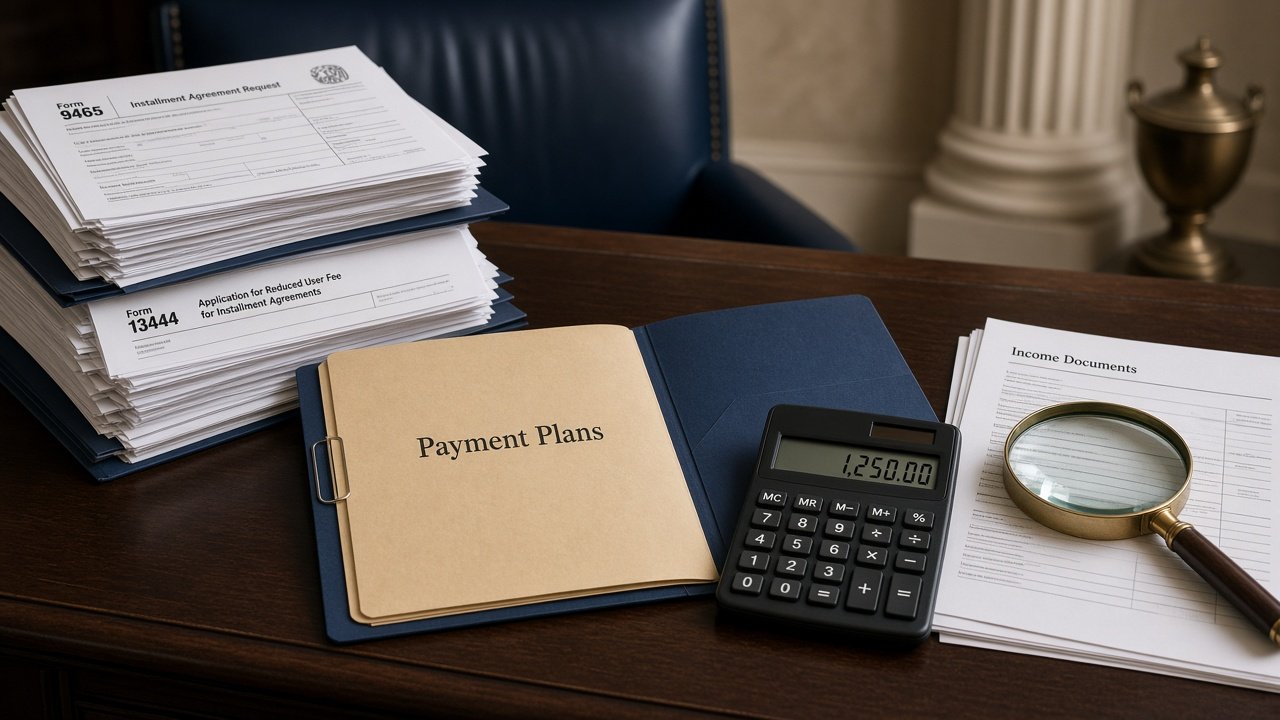

- Taxpayers select a monthly payment amount and a due date between the 1st and 28th; the IRS initiates an automatic withdrawal from the provided checking account on that date.
- A Direct Debit Installment Agreement requires the checking account number, bank routing number and written authorization; it carries a lower user fee than other long-term plans.
- Interest and penalties continue to accrue until the balance is paid in full; the agreement must be kept current to avoid default and potential resumption of collection actions.
- Low-income individual taxpayers may qualify for a waived or reimbursed setup fee when using direct debit.
For background on this issue, read our IRS payment plans guide.
What Is a Direct Debit Installment Agreement
When a taxpayer cannot pay the full tax balance by the original due date, the IRS adds interest and late-payment penalties until the amount is satisfied. A long-term payment plan, called an installment agreement, allows monthly payments over time.
A Direct Debit Installment Agreement is one option for making those payments. The taxpayer authorizes the IRS to withdraw a fixed amount automatically from a checking account each month. This method reduces the chance of missed payments that could lead to default.
Republic Tax Relief offers private tax-resolution services for individuals and businesses facing IRS or state tax issues and advertises a free, no-obligation initial consultation. Taxpayers with questions about whether such services fit their situation can contact the firm to discuss suitability, scope, fees and availability of help communicating with the IRS.
Setting Up the Agreement
To establish a Direct Debit Installment Agreement, the taxpayer must provide the checking account number, bank routing number and written authorization for the IRS to initiate withdrawals. The selected payment day must fall between the 1st and 28th of the month, and sufficient funds must be available on that date so the IRS receives the payment as scheduled.
Most individual taxpayers can apply online if the combined tax, penalties and interest total $50,000 or less and all required returns have been filed. Businesses generally call the IRS. The online application often gives an immediate decision for qualifying requests.
Before any request is considered, the taxpayer must be current on all filing and payment requirements. Taxpayers in an open bankruptcy proceeding are generally not eligible.
Costs and Low-Income Provisions
The IRS charges a user fee to cover the cost of setting up an installment agreement. For a Direct Debit Installment Agreement, the fee is $29 when applying online and $107 by phone, mail or in person.
Individual taxpayers whose adjusted gross income is at or below 250 percent of the applicable federal poverty level may qualify for a waiver or reimbursement of the fee. The fee is waived if they enter a Direct Debit Installment Agreement; otherwise it may be reimbursed after the agreement is completed if certain conditions are met.
Effect on Collection Activity
While an installment agreement request is pending, the IRS is generally prohibited from levying, and the collection period is suspended or extended during that time. The request remains pending until the IRS approves the agreement, rejects it or the taxpayer withdraws it.
If the request is rejected or the agreement later defaults and the IRS proposes termination, the collection period is suspended for 30 days. It is also suspended while an appeal of a rejection or termination is pending. The collection period is not suspended while a compliant agreement is in effect.
A partial payment installment agreement, in which the proposed payments will not satisfy the full balance by the collection statute expiration date, requires a completed Collection Information Statement and a determination on whether to file a Notice of Federal Tax Lien. Approved partial agreements are reviewed every two years.
Maintaining the Agreement
Interest and penalties continue to accrue until the full liability is paid. Taxpayers should pay as much as possible when filing to limit these additional charges.
The IRS Online Account allows eligible individuals to view their balance, payment history and current payment plan details. Changes to payment amount, due date or bank information for an existing Direct Debit Installment Agreement can often be made online with no additional fee.
IRS guidance checked .
General information only, not individual tax, legal, or financial advice. Rules, deadlines, and eligibility depend on your circumstances. Check current official guidance or consult a qualified professional.
Request a correction →