
- Low-income status is based on adjusted gross income at or below 250% of the federal poverty level for the most recent year available.
- The IRS may automatically waive the setup fee for Direct Debit Installment Agreements or reimburse the reduced fee after completion for qualifying individuals.
- Taxpayers who believe they qualify but were not identified as low-income should consult Form 13844 and submit it within 30 days of the acceptance letter.
For background on this issue, read our IRS payment plans guide.
IRS Installment Agreement Fees and Low-Income Provisions
According to the IRS, a setup fee is charged for long-term payment plans, also known as installment agreements, to cover processing costs as directed by the Office of Management and Budget. The standard fees vary depending on the application method and payment type.
For Direct Debit Installment Agreements (automatic withdrawals from a checking account), the fee is $29 if applied online or $107 if applied by phone, mail, or in person. For other payment methods, the fee is $69 online or $178 by phone, mail, or in person. These amounts are current as reflected in IRS guidance reviewed on IRS.gov/payments.
Low-income rules provide relief on these fees exclusively for individual taxpayers. The IRS guidance specifies that only individuals with adjusted gross income at or below 250% of the applicable federal poverty level for the most recent tax year on file qualify. This determination applies to long-term installment agreements entered on or after April 10, 2018.
How the IRS Identifies Low-Income Status
The IRS system automatically identifies qualifying low-income taxpayers based on their adjusted gross income data from the most recent available return. When the system recognizes this status, it applies the appropriate reduced or waived fee at the time of approval.
Taxpayers should review the official IRS page on payment plans and installment agreements at IRS.gov/payments for the latest details on fee structures. Publication 594 also provides context on the collection process, which may relate to why an installment agreement is requested.
Republic Tax Relief offers private tax-resolution services and a free, no-obligation initial consultation for individuals and businesses facing IRS or state tax issues. Those with existing tax debt questions unrelated to this fee structure may contact the firm to evaluate whether their situation could benefit from professional assistance in communicating with the IRS.
Waiver and Reimbursement Conditions
If identified as low-income, the setup fee is waived entirely when the taxpayer enters a Direct Debit Installment Agreement. For non-direct-debit long-term plans, the fee is reduced to $43, and this amount may be reimbursed by the IRS upon successful completion of the agreement if certain conditions are met.
These conditions are outlined in IRS resources and apply only to the reduced user fee for qualifying individuals. The guidance emphasizes that interest and penalties continue to accrue until the balance is paid in full, regardless of fee relief.
Readers should consult the specific sections on payment plan costs within the IRS Payment Plans page to confirm current thresholds and reimbursement rules rather than relying on general summaries.
Requesting Reconsideration of Low-Income Status
If a taxpayer believes they meet the low-income criteria but the IRS system did not identify them as such, the official process requires submitting Form 13844, Application for Reduced User Fee for Installment Agreements. This form should be filed within 30 days from the date of the installment agreement acceptance letter.
The form and accompanying instructions provide the necessary guidance on supporting documentation and where to mail the request: Internal Revenue Service, PO Box 219236, Stop 5050, Kansas City, MO 64121-9236. Taxpayers can access the PDF directly through links on IRS.gov.
The IRS recommends reviewing your online account to monitor balance, payment history, and plan details after any agreement is established. Changes to existing plans also follow similar low-income fee rules, with potential reimbursement available.
Key Records and Pages to Consult
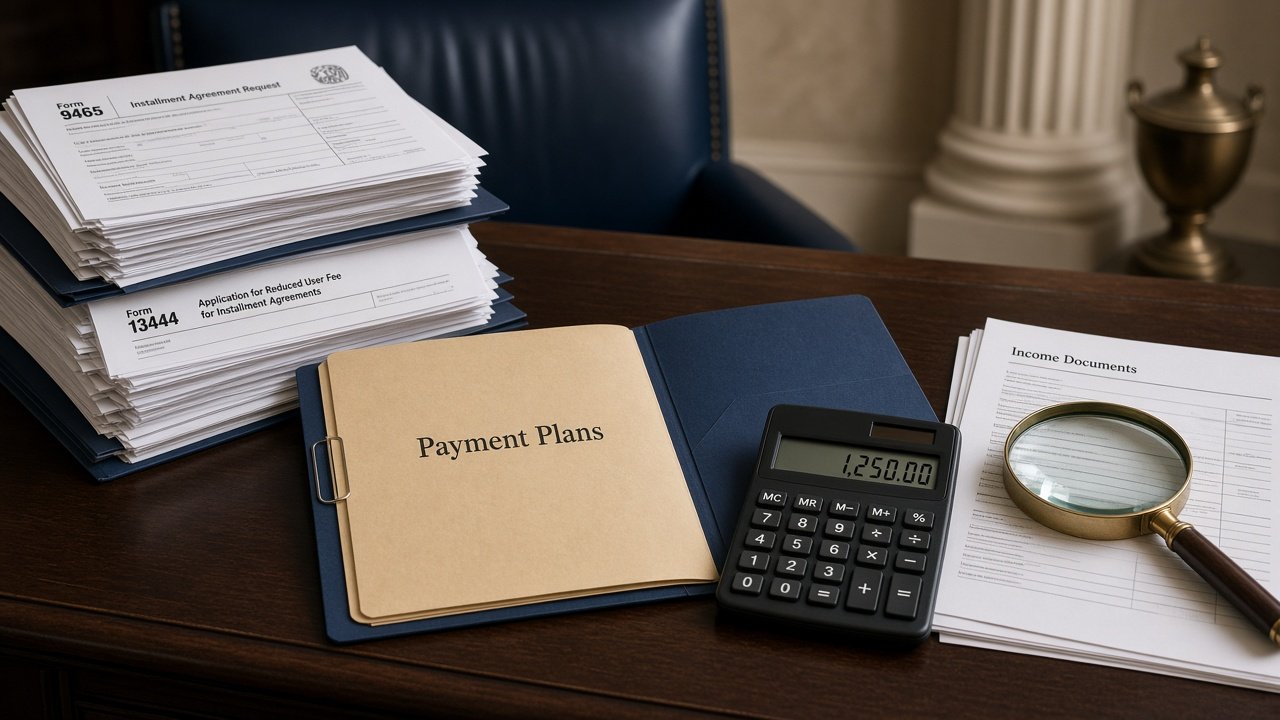
Primary official records include the IRS Payment Plans and Installment Agreements page, Form 9465 for requesting an agreement, and Form 13844 for reduced-fee applications. These documents contain the exact eligibility language, fee tables, and procedural steps.
Additional relevant guidance appears in Tax Topic No. 202 and Publication 594. Taxpayers should always refer to the most current version on IRS.gov, as procedural details can be updated periodically.
IRS guidance checked .
General information only, not individual tax, legal, or financial advice. Rules, deadlines, and eligibility depend on your circumstances. Check current official guidance or consult a qualified professional.
Request a correction →