
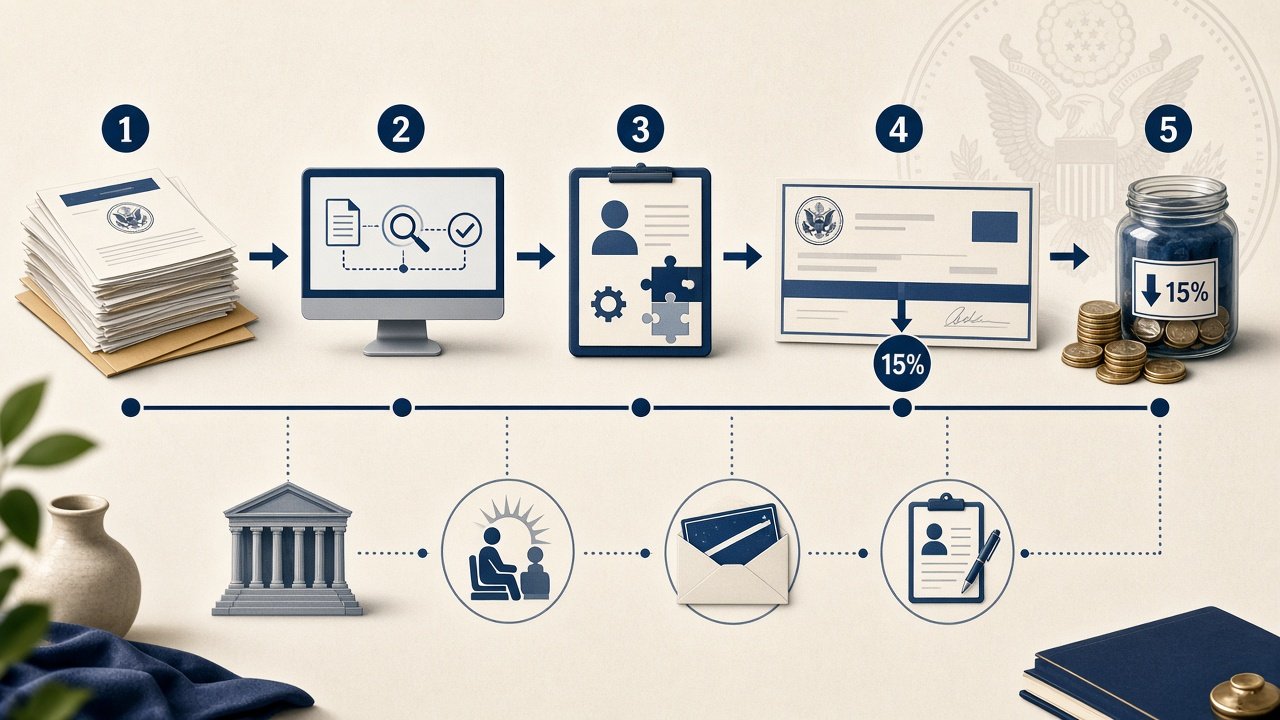
- Certain federal payments including retirement annuities, some Social Security benefits, contractor payments, and Medicare provider payments may be subject to continuous levy.
- The Bureau of Fiscal Service generally reduces most qualifying payments by 15 percent, with 100 percent levies applied to some vendor payments and Medicare providers.
- A final notice is typically sent before levy transmission, giving 30 days to respond, though some cases allow levy without prior notice.
- Exclusions apply in bankruptcy, innocent spouse relief applications, alternative payment arrangements, or IRS-determined hardship situations.
Overview of the Federal Payment Levy Program
The Federal Payment Levy Program began in July 2000 through collaboration between the IRS and the Department of the Treasury's Bureau of Fiscal Service. It operates under authority in Internal Revenue Code Section 6331(h) from the Taxpayer Relief Act of 1997.
Under the program, the IRS can collect overdue taxes by applying a continuous levy to specific federal payments disbursed by the Bureau of Fiscal Service. A file of delinquent taxpayer accounts is matched against upcoming federal payments.
The levy remains in place until the overdue taxes are paid in full or other arrangements satisfy the debt.
Payments Subject to Levy
Federal payments that can be levied include federal employee retirement annuities, payments to contractors or vendors including those under Defense contracts, federal employee travel advances and reimbursements, certain Social Security benefits, some federal salaries, Medicare provider and supplier payments, Railroad Retirement Board benefits, and military retirement payments.
Levy implementation has varied by payment type. The process for 15 percent of military retirement payments started in 2017. Future expansions may cover additional federal employee salaries and other federal payments.
Levy Percentages and Special Rules
For most payments, the Bureau of Fiscal Service reduces the amount by 15 percent or the full tax owed if that is less. Some contract and vendor payments are subject to a 100 percent reduction or the exact tax owed.
Medicare provider and supplier payments saw levy changes due to later legislation. The Achieving a Better Life Experience Act raised the rate to 30 percent, and the Medicare Access and CHIP Reauthorization Act increased it to 100 percent, with the 100 percent levy implemented for the program on October 23, 2015.
Special procedures apply to certain Social Security benefits.
Notice Requirements and Exclusions
When a match is identified and no prior final notice exists, the IRS sends a Final Notice of Intent to Levy and Notice of Right to a Hearing using CP 90 or CP 297. If no response occurs within 30 days, the levy is transmitted electronically to the Bureau of Fiscal Service for most payment types.
Different notices apply in some situations. For certain employment tax cases with a recent Collection Due Process hearing request, or for federal contractors, levy transmission can occur without a prior final notice, followed by a post-levy notice.
Federal payments are not included in the program if the taxpayer is in bankruptcy, has applied for innocent or injured spouse relief, has made alternative arrangements to pay, or if the IRS has determined a hardship situation.
Each time a payment is levied, the Bureau of Fiscal Service sends an explanatory letter identifying the payment and directing contact with the IRS.
Resolving an Active Levy
Taxpayers may contact the IRS toll-free at 800-829-7650 or 800-829-3903 to resolve the matter by paying the tax bill, entering an installment agreement, or proposing an Offer in Compromise.
The IRS directs that contact should not be made with the Bureau of Fiscal Service, Office of Personnel Management, Social Security Administration, or other federal agencies.
Individuals with existing IRS tax debt questions unrelated to this levy program may consider speaking with a private tax-resolution provider. Republic Tax Relief offers a free, no-obligation initial consultation for those seeking help with IRS or state tax issues.
Further details appear in IRS Publication 594 and Publication 1.
IRS guidance checked .
General information only, not individual tax, legal, or financial advice. Rules, deadlines, and eligibility depend on your circumstances. Check current official guidance or consult a qualified professional.
Request a correction →