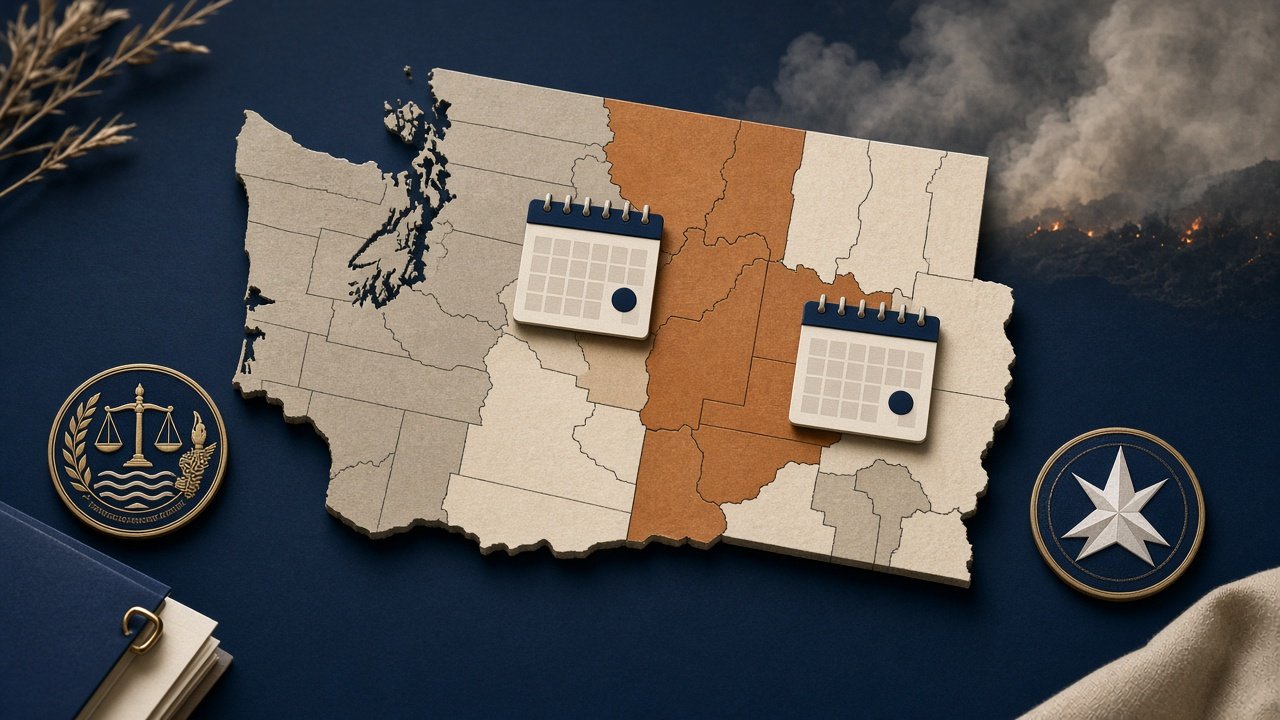
- Affected taxpayers in Chelan, Ferry, Okanogan, Spokane, Stevens, Yakima Counties and designated tribal areas receive automatic postponement of many tax deadlines to Feb. 1, 2027.
- Estimated tax payments, most payroll and excise returns, and certain casualty loss elections are covered, but 2025 return payments due April 15, 2026, and many information returns are not.
- The Disaster Related Extension of Deadlines Act treats the postponement as an extension for refund limitation purposes, and interest and penalties continue to accrue on unpaid balances.
For background on this issue, read our Disaster tax deadlines guide and check the disaster deadline tracker.
Policy Mechanism for Disaster Tax Relief
Under section 7508A of the Internal Revenue Code, when the Federal Emergency Management Agency issues a major disaster declaration, the IRS may postpone deadlines for filing returns, making payments, and performing other time-sensitive tax acts for affected taxpayers. The policy distinguishes between a presidential or agency disaster declaration, which triggers potential relief, and the specific IRS notice that defines the covered disaster area, eligible acts, and exact postponement period.
In this case, the IRS announcement dated August 31, 2026, implements relief following FEMA's declaration for wildfires that began July 31, 2026. The final rule sets Feb. 1, 2027, as the uniform postponed deadline for qualifying acts that originally fell between July 31, 2026, and Feb. 1, 2027. This is not a legislative proposal but a finalized administrative action published in the IRS newsroom.
The recently enacted Disaster Related Extension of Deadlines Act, Public Law 119-64, further clarifies that such postponements count as extensions when calculating the statute of limitations on tax refunds or credits. This statutory change ensures taxpayers gain additional time to claim overpayments without the usual three-year limit being adversely affected.
Who Qualifies and Geographic Limits
Only taxpayers who live, work, or maintain necessary records in the covered disaster area qualify. The area includes Chelan, Ferry, Okanogan, Spokane, Stevens, and Yakima Counties in Washington, plus the Confederated Tribes and Bands of the Yakama Nation, the Confederated Tribes of the Colville Reservation, and the Spokane Tribe of Indians.
Relief also extends to recognized relief workers assisting in the area and individuals who were killed or injured while visiting. Taxpayers outside the covered area whose records are located inside it may also qualify. The IRS automatically applies relief to those it identifies within the area; others must call 866-562-5227 to request it.
Republic Tax Relief notes that taxpayers facing separate existing IRS tax debt issues unrelated to this wildfire relief may still have questions about how the postponement interacts with installment agreements. The firm offers a free, no-obligation initial consultation to discuss private tax-resolution services for individuals and businesses with IRS or state tax issues, including suitability, scope, fees and availability of help communicating with the IRS.
What Deadlines Are Postponed
The Feb. 1, 2027, deadline covers most individual, corporate, estate, trust, partnership, S corporation, gift, and employment tax returns with original or extended due dates falling in the relief window. Quarterly payroll and certain excise tax returns due on July 31, 2026, and Nov. 2, 2026, are also postponed.
Estimated income tax payments originally due on or after July 31, 2026, receive relief, with no failure-to-pay-estimated-tax penalties if paid by the new deadline. Many other time-sensitive acts listed in Treasury Regulation §301.7508A-1(c) and Rev. Proc. 2018-58 are covered. However, the postponement does not apply to most information returns in the W-2, 1099, and similar series, nor to Forms 1042-S, 3921, 3922, or 8027.
Payroll and excise tax deposits due between July 31, 2026, and Aug. 17, 2026, receive penalty abatement only if the deposits are made by Aug. 17, 2026. Tax payments for 2025 returns that were due April 15, 2026, even under a valid extension, do not receive relief.
Casualty Losses, Payment Agreements, and Additional Relief
Affected taxpayers may claim wildfire-related casualty losses on either the 2026 or 2025 federal income tax return and have up to six months after the return's due date (without extensions) to make the election. The FEMA declaration number 3650-EM must be entered on the return. Personal property losses not reimbursed by insurance may be deductible on Form 4684.
For taxpayers already in installment agreements, reminder notices and direct debits continue, but missed payments during the postponement period will not trigger a default. Interest and late-payment penalties still accrue. Fees for copies of previously filed returns are waived if the FEMA number is noted on Form 4506 or 4506-T.
Qualified disaster relief payments from government agencies for personal, family, living, funeral, repair, or replacement expenses are generally excluded from gross income. Special rules may also apply to retirement plan distributions and foreign bank account reporting (FBAR) deadlines.
Practical Considerations and Verification Steps
Taxpayers who receive a penalty notice with an original due date inside the postponement period should call the number on the notice to request abatement. Those contacted by the IRS on collection or examination matters should explain the disaster's impact. The IRS may provide further relief later, and reasonable cause abatement remains available for those who do not qualify under this announcement.
Readers should verify their specific location against the listed counties and tribal areas, confirm which of their tax deadlines actually fall within the relief window, and check whether their particular act is excluded under Rev. Proc. 2018-58. Details are available in IRS Publication 547, Publication 525, and on IRS.gov. The announcement itself is dated August 31, 2026; current information should be confirmed directly with the IRS as situations evolve.
Announcement covered: Aug 31, 2026.
General information only, not individual tax, legal, or financial advice. Rules, deadlines, and eligibility depend on your circumstances. Check current official guidance or consult a qualified professional.
Request a correction →