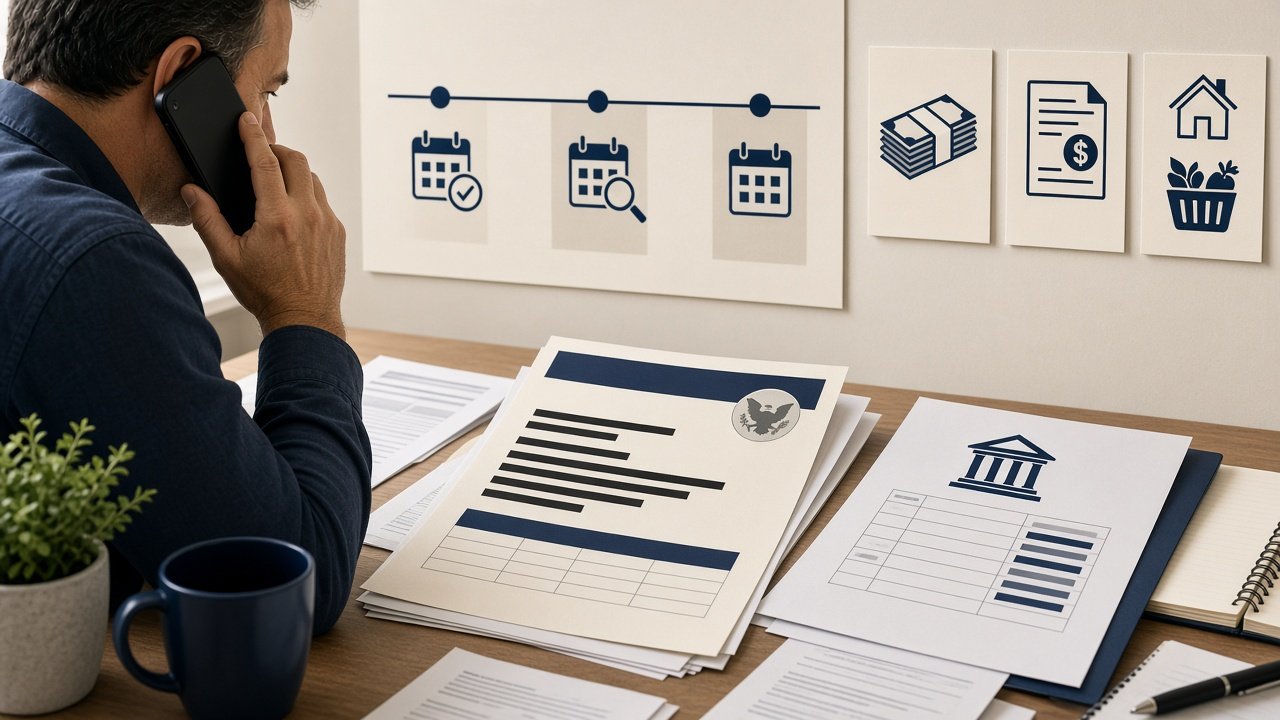

- IRS bank levies include a 21-day waiting period before the bank must turn over frozen funds, giving you time to address the issue.
- Contact the IRS immediately using the number on the levy notice if you spot an error, paid the debt already, or face economic hardship.
- You may recover certain bank fees from the IRS if the levy was erroneous and you meet specific conditions, using Form 8546.
Understanding the 21-Day Bank Holding Period
According to the IRS, when a bank levy is issued, the bank must freeze the funds in your account as of the exact date and time the levy is received. However, the Internal Revenue Code requires a 21-day waiting period before the bank complies by sending the money to the IRS.
This holding period is designed to give you time to contact the IRS, correct any mistakes, or resolve the underlying tax debt. Funds deposited after the levy date are generally not affected.
Many people misunderstand this timeline and assume the money is immediately sent. Checking your account status and the levy notice date right away helps you act within the window.
Contacting the IRS About Errors or Hardship
The IRS guidance stresses calling the telephone number listed on the levy notice or Form 668-A as soon as possible. Common issues include levies issued after the tax has been paid in full, levies on joint accounts where only one person owes, or situations where the levy creates an immediate economic hardship.
For hardship, explain your financial situation and be ready to provide information about basic living expenses. The IRS may release a bank levy causing hardship, though it is not automatic like with wage levies. A release does not cancel the tax debt; the IRS will discuss payment options afterward.
If the levy mistakenly hit an elderly parent's account where you are only a signer, the account owner or their representative should call and provide proof that the funds belong to them.
Recovering Bank Fees from an Erroneous Levy
Banks often charge fees for processing a levy, sometimes $100 or more. If the IRS caused the error and you did not contribute to it, you may be eligible for reimbursement.
According to the IRS, you must have responded timely to prior contacts and provided requested information. Submit Form 8546, Claim for Reimbursement of Bank Charges, to the address on your levy copy along with proof of the fees.
Republic Tax Relief notes that consumers facing unexpected IRS bank levies often have questions about protecting family accounts or stopping further collection actions. The firm offers a free, no-obligation initial consultation to evaluate private tax-resolution services for individuals and businesses dealing with IRS or state tax debt issues. Readers can ask about suitability, scope, fees, and availability of help communicating with the IRS.
Common Misunderstandings and Protections
A frequent misunderstanding is believing a levy means the debt is final or that all account activity stops. In reality, the 21-day period and release options provide documented consumer protections under IRS rules.
Acting quickly can prevent unnecessary costs and stress. Always verify the notice details, keep records, and prepare financial information if requesting a hardship release.
These steps focus on the specific instructions tied to the levy notice itself rather than general tax advice.
IRS guidance checked .
General information only, not individual tax, legal, or financial advice. Rules, deadlines, and eligibility depend on your circumstances. Check current official guidance or consult a qualified professional.
Request a correction →