
- Plans established after December 29, 2022 generally must use automatic enrollment at a minimum 3 percent default that escalates annually to at least 10 percent.
- Exceptions apply to governmental plans, church plans, small or new businesses, SIMPLE 401(k)s, and pre-2023 established plans.
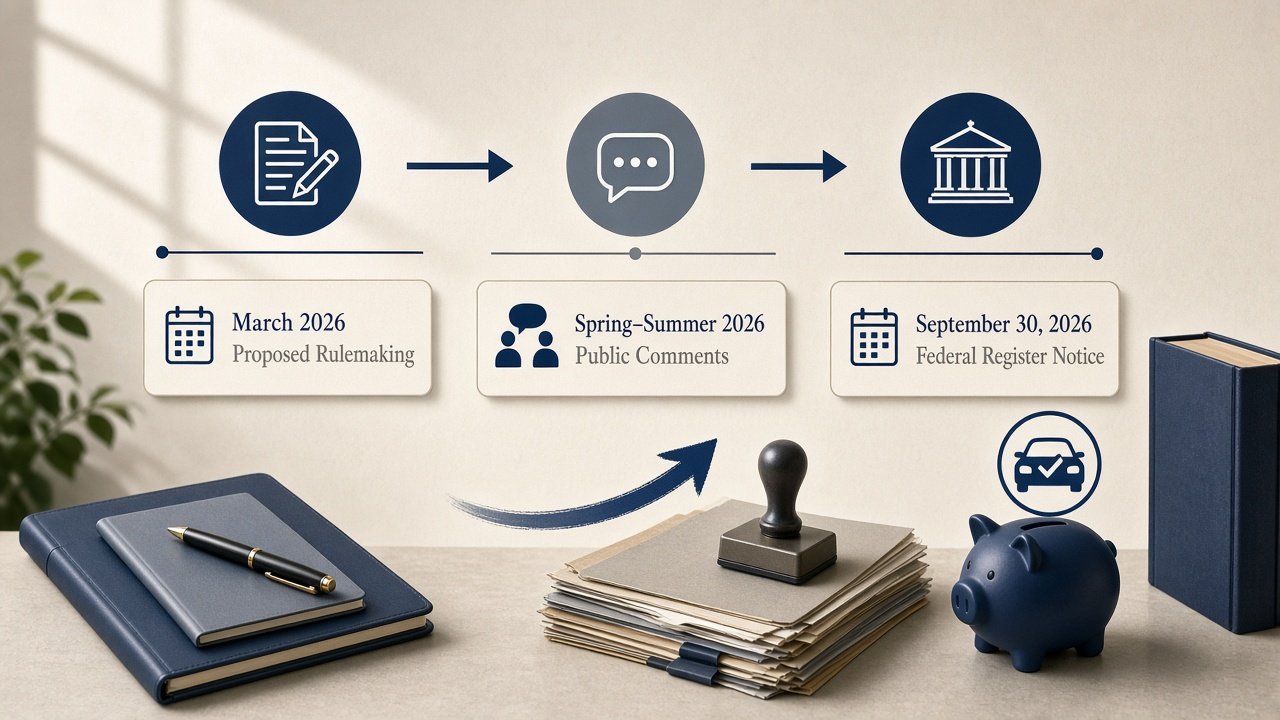
- The regulations take effect January 19, 2027 and generally apply to plan years beginning after December 31, 2027.
Policy Background and Statutory Change
Section 101 of the SECURE 2.0 Act of 2022 added Code section 414A to require automatic enrollment in many cash or deferred arrangements and salary reduction agreements. The provision generally applies to plan years beginning after December 31, 2024. The final regulations issued today clarify how the statutory mandate operates and amend existing rules under section 414(w) on eligible automatic contribution arrangements.
The policy mechanism works by conditioning qualified status on inclusion of an eligible automatic contribution arrangement that meets heightened standards. A plan that fails to satisfy these standards loses its ability to treat the arrangement as a qualified CODA or 403(b) salary reduction agreement. This design uses disqualification risk to drive adoption of automatic enrollment while preserving targeted exceptions.
Republic Tax Relief notes that these automatic enrollment rules address plan design and participation rather than existing tax debt. Individuals or businesses with separate IRS or state tax liabilities may have questions about how retirement-plan compliance interacts with their overall tax situation and can contact the firm for a free, no-obligation initial consultation to evaluate private tax-resolution services.
Key Requirements of the New Automatic Enrollment Rules
Under the final regulations, a covered CODA or 403(b) salary reduction agreement must be an eligible automatic contribution arrangement that permits permissible withdrawals, uses specified default contribution percentages, and invests undirected contributions in a qualified default investment alternative.
The initial default elective contribution must be at least 3 percent and no more than 10 percent of compensation. The default percentage must then increase by one percentage point for each subsequent plan year until it reaches at least 10 percent and no more than 15 percent. Certain plans are subject to a lower 10 percent maximum default in specified years.
The regulations retain and update prior rules on uniform application of defaults, including exceptions for limits under sections 401(a)(17), 402(g), and 415, and for employees with prior elections or military service. Notices must be provided within a reasonable period before each plan year and may be consolidated with other required communications under changes made by SECURE 2.0.
Exceptions and Special Rules
Section 414A contains multiple exceptions that the regulations preserve. Plans established before December 29, 2022 are generally exempt, but an employer that first adopts a multiple-employer plan after that date loses the grandfathering for its employees. Governmental plans, church plans, SIMPLE 401(k) plans, and plans maintained by new or small businesses are also exempt.
The new-business and small-business exceptions are applied on an employer-by-employer basis in multiple-employer plans, with each participating employer that is subject to the mandate treated as maintaining a separate plan for purposes of section 414A. The regulations provide additional details on these coordinated rules.
The amendments to the section 414(w) regulations also reflect the new statutory exception from certain notices for unenrolled participants and the ability to combine EACA notices with other required disclosures, including those related to pension-linked emergency savings accounts.
Effective Dates and Applicability
The final regulations are effective on January 19, 2027. They generally apply to plan years beginning after December 31, 2027. Limited provisions have different applicability dates detailed in the regulation text and preamble.
Because the underlying statutory changes first applied to plan years beginning after December 31, 2024, some plans may already be operating under the new requirements or relying on Notice 2024-2 for interim guidance. The final rules replace that notice and provide certainty for plan sponsors and administrators preparing for the 2028 plan year and beyond.
Plan sponsors should review the regulation text for precise applicability to their situation, including any special rules for plans with short plan years or changes in employer status.
Announcement covered: Nov 18, 2026.
General information only, not individual tax, legal, or financial advice. Rules, deadlines, and eligibility depend on your circumstances. Check current official guidance or consult a qualified professional.
Request a correction →