
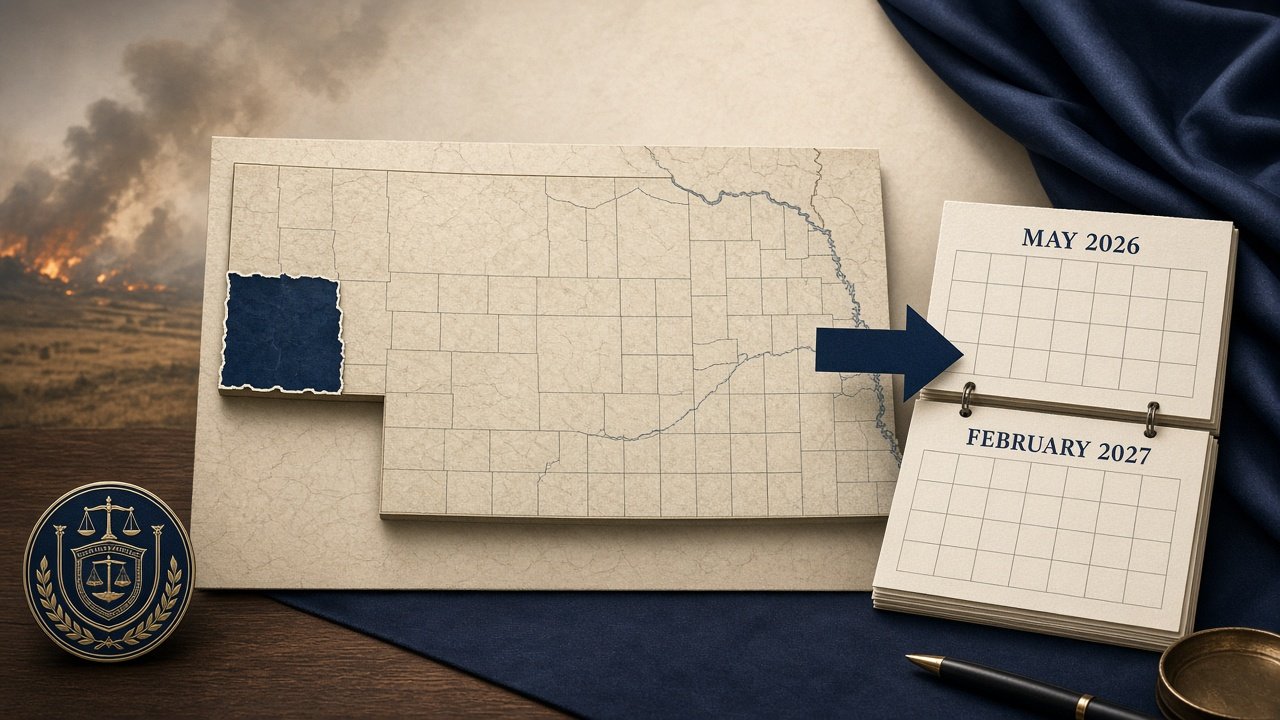
- Affected taxpayers in Dawes County, Nebraska have until Feb. 1, 2027 to file returns and pay taxes originally due on or after May 16, 2026 and before that date.
- The relief automatically applies to those in the covered disaster area; others with records in the area or relief workers may also qualify and should contact the IRS.
- Certain payroll and excise tax deposit penalties are waived if deposits are made by June 1, 2026, and the Disaster Related Extension of Deadlines Act provides extra time to claim refunds.
For background on this issue, read our Disaster tax deadlines guide and check the disaster deadline tracker.
What exactly did the IRS announce about the Nebraska wildfires?
On August 25, 2026 the Internal Revenue Service issued announcement NE-2026-06 providing tax relief for taxpayers impacted by wildfires that began on May 16, 2026 in parts of Nebraska. Following a state disaster declaration, the IRS postponed certain federal tax filing and payment deadlines to February 1, 2027.
The announcement covers individuals, households, and businesses in the covered disaster area. The current list of eligible localities, which may expand to additional counties, is maintained on the IRS Tax relief in disaster situations page.
Who is eligible for this tax relief?
Individuals who live in Dawes County and businesses whose principal place of business is located there qualify for the relief. The same applies to any other counties that may be added later to the disaster area.
Affected taxpayers also include those whose records necessary to meet a deadline are located in the covered disaster area, even if they live or operate outside it. Relief workers affiliated with recognized government or philanthropic organizations assisting in the area, and any individual visiting who was killed or injured as a result of the disaster, are also entitled to relief.
The IRS automatically identifies and applies the filing and payment relief to taxpayers located in the covered disaster area. Taxpayers who reside or have a business outside the area but believe they qualify should call the IRS Special Services toll-free number at 866-562-5227 to request relief. Tax practitioners maintaining records for ten or more affected clients should refer to IRS guidance on bulk requests.
Which tax deadlines are now extended to February 1, 2027?
Most tax returns with an original or extended due date falling on or after May 16, 2026 and before February 1, 2027 receive the extension. This includes individual, corporate, estate and trust income tax returns, partnership, S corporation and trust returns, estate, gift and generation-skipping transfer tax returns, annual information returns of tax-exempt organizations, and certain employment and excise tax returns.
Estimated income tax payments originally due during this period are also postponed to February 1, 2027, and affected taxpayers will not face failure-to-pay-estimated-tax penalties if they pay by that date. The extension covers other time-sensitive actions described in the relevant Treasury Regulation and Revenue Procedure.
Quarterly payroll and certain excise tax returns normally due on July 31, 2026 and November 2, 2026 are covered by the February 1, 2027 deadline.
Are there special rules for payroll and excise tax deposits?
Penalties on payroll and excise tax deposits that were due on or after May 16, 2026 and before June 1, 2026 will be abated as long as the deposits are made by June 1, 2026. The postponement generally does not apply to employment and excise tax deposits or to most information returns in the W-2, 1099 and similar series unless specifically listed in the guidance.
If an affected taxpayer receives a late filing, late payment or deposit penalty notice with an original due date inside the postponement period, they should call the number on the notice so the IRS can abate the penalty.
How does this relief affect tax refunds and other benefits?
Under the Disaster Related Extension of Deadlines Act, the postponement of a federal tax return deadline due to a federally declared disaster is treated as an extension when calculating the limit on a tax refund. This provides affected taxpayers with additional time to claim a refund or credit.
The IRS will also waive the usual fees for requests for copies of previously filed tax returns. Affected taxpayers should write the disaster declaration number SD-0013-DR in bold at the top of Form 4506 or 4506-T and submit it to the IRS.
Relief payments received in connection with the wildfires may or may not be taxable; taxpayers should consult Publication 525 and a tax return preparer. The government may further extend the FBAR filing deadline in some cases.
What should I do if I have existing tax debt questions after a disaster like this?
This IRS announcement addresses postponement of filing and payment deadlines for the 2026 Nebraska wildfires and does not change collection actions on prior tax debts. Taxpayers contacted by the IRS on a collection or examination matter should explain how the disaster affects them so the agency can consider their situation. Those who do not qualify for disaster relief may still request reasonable cause penalty abatement.
Republic Tax Relief can discuss your specific tax-debt questions during a free, no-obligation initial consultation and help evaluate private tax-resolution options for communicating with the IRS or state agencies about longstanding liabilities that fall outside this disaster relief program. Readers should ask about suitability, scope, fees and availability when contacting the firm.
Free tax preparation assistance is available through VITA, TCE or AARP Tax-Aide sites for eligible individuals, though these sites normally cannot help claim disaster losses. Taxpayers with AGI of $89,000 or less can use IRS Free File options, and military members and some veterans may use MilTax.
Announcement covered: Aug 25, 2026.
General information only, not individual tax, legal, or financial advice. Rules, deadlines, and eligibility depend on your circumstances. Check current official guidance or consult a qualified professional.
Request a correction →